
How to Drain Gas from a Briggs and Stratton Lawn Mower
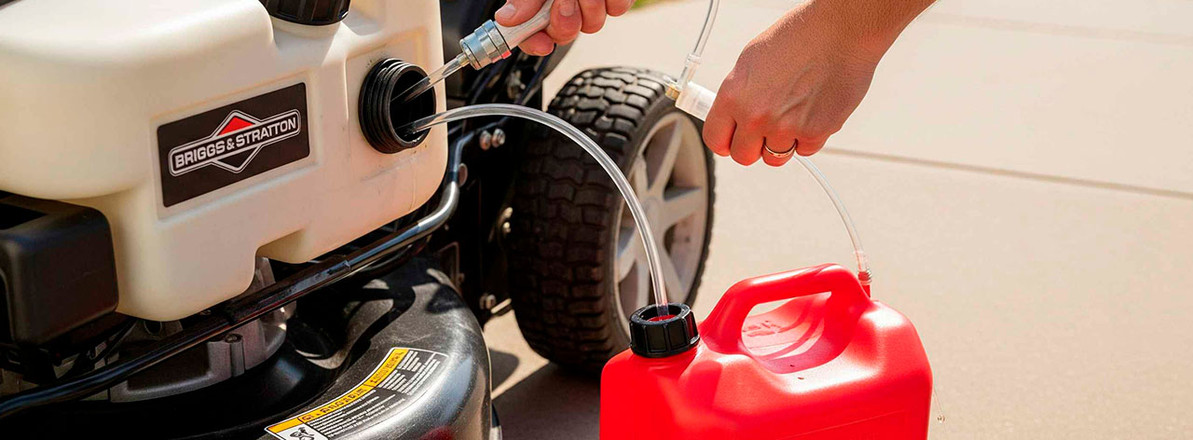
Old or stale fuel can cause starting problems, rough running, and engine issues. If you need to know how to drain gas from a Briggs & Stratton lawn mower, this guide covers two methods:
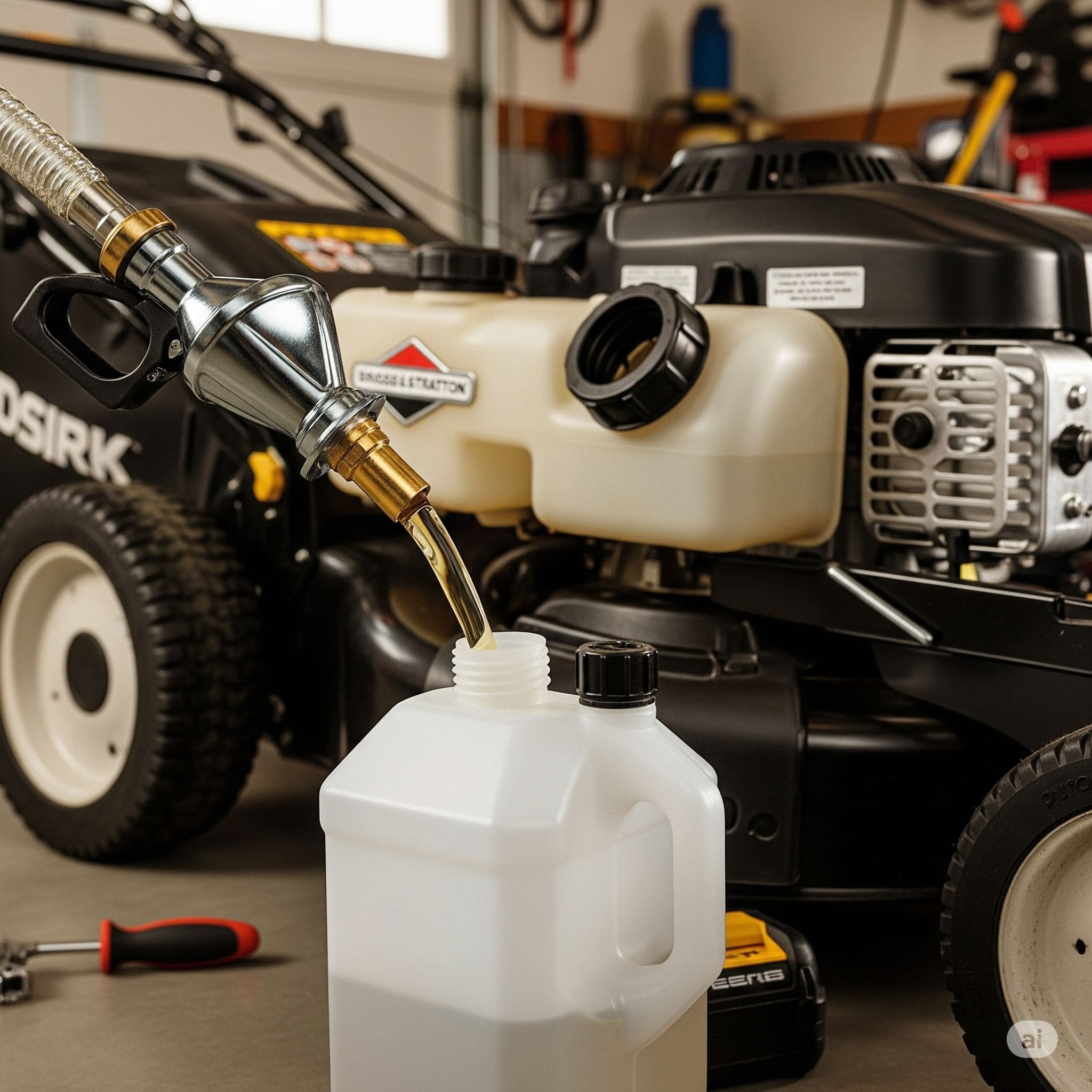
- Siphon pump: A clean, straightforward way to remove fuel from the tank.
- Fuel line removal: An alternative when you don't have a siphon pump.
Draining fuel properly helps prevent fuel-related problems and prepares your mower for maintenance or storage.
Why You Should Drain Your Lawn Mower’s Gas
Fuel doesn't stay fresh forever. Over time, gasoline degrades, forms sticky residues, and age-worn gaskets do not prevent leaks of gas, which can clog your carburetor or fuel lines. If your Briggs and Stratton mower has trouble starting or staying on, old gas may be the problem. Here's why fuel draining is necessary:
- Prevents clogging of the fuel system and carburetor
- Prevents engine misfire and stubborn starts
- Extends the lifespan of the engine
- Prepares the mower for the storage season
- Reduces corrosion hazard in fuel components
If the fuel has been sitting in your mower for more than 30 days, it is time to drain it.
What You'll Need
Draining the fuel tank of the lawn mower may kill the carburetor, a vital part of the mower. Draining must be taken with caution or avoided if you don't know what you are doing, and fuel stabilizers should be applied to maintain engine health while in storage.
In siphoning gas from a Briggs and Stratton lawn mower, the methods used are siphoning or utilizing the drain screw on the carburetor. There are plenty of resources that provide step-by-step processes. Prepare to begin by gathering some tools and safety equipment:
- Fuel-safe container (gas can or plastic jug with a tight lid)
- Pliers
- Screwdriver or socket wrench
- Rubber gloves
- Safety glasses
- Fuel siphon pump (optional but handy)
- Rag or paper towels
Work always outdoors or in a well-ventilated area to avoid inhaling fumes.
Step-by-Step: How to Drain Gas from a Briggs and Stratton Lawn Mower
There are two main ways to remove gasoline: via siphon or by disconnecting the fuel line. Both are effective. If you have a siphon pump, it’s cleaner. If not, the manual method will still get the job done.
Method 1: Siphoning Fuel (Cleanest Method)
| Step | Instructions |
|---|---|
1. Turn off the engine and let it cool |
Make sure the mower hasn't been run for at least 30 minutes. |
2. Put the mower on a level surface |
This will prevent fuel from sloshing around and enable you to access the tank easily. |
3. Open the gas tank |
Unscrew the cap and insert one end of the siphon tube in the tank. |
4. Place the other end into a fuel-safe container |
Make sure the container is below the gas tank to enable gravity to assist. |
5. Prime or pump the siphon |
Depending on your type of siphon, either squeeze the bulb or pull the fuel manually until the fuel comes out steadily into the container. |
6. Pump or prime the siphon |
Based on your siphon model, either squeeze the bulb or suck gasoline manually until fuel flows into the container consistently. |
7. Drain until empty |
Once the gas does not flow anymore, shake the mower gently to dislodge any remaining fuel. |
8. Seal the container and dispose or store safely |
Label the container if the gas is no good, and dispose of in accordance with your local regulations. |
Method 2: Taking Off the Fuel Line (Hand Method)
| Step | Instructions |
|---|---|
Take off the spark plug wire |
Always do that first for safety purposes before getting involved with any part of the engine. |
Access to the fuel line |
Take out the air filter cover of the mower if it hinders it. Locate the fuel line—normally a black rubber tube from the gas tank to the carburetor. |
Clamp the fuel line (optional but cleaner) |
Use a clamp or pinch the hose with pliers so you don't spill when remove. |
Place a container under the fuel line |
This will collect the fuel as you unplug it. |
Remove the fuel line |
Loosen the clamp securing the hose to the tank with pliers. Gently pull the hose off. Fuel will begin to flow into your container. |
Drain out fully |
Let the gas drain out fully. A little inclination towards the fuel outlet will help. |
Reattach the hose |
Reconnect the fuel line firmly after draining and ensure that it is leak-free. |
What to Do After Draining
Once gas has been drained, these steps should be done:
- Check the fuel filter: Clean or replace if it appears clogged.
- Clean the carburetor: If old fuel was consumed, gumming may have occurred.
- Add new fuel: Use fresh, ethanol-free gasoline or add a gas stabilizer to avoid risk and to prolong life.
- Run the mower for a minute: This serves to distribute new gas throughout the carburetor.
- Check for leaks: Ensure all the hoses are tightened and secured.

When Should You Drain Your Briggs and Stratton Mower?
Drain your gas if:
- You’re storing the mower for winter or over 30 days.
- The fuel is more than a month old.
- The mower has sat unused and won’t start.
- You’re doing engine maintenance (like cleaning the carburetor).
- You accidentally used the wrong type of fuel.
Never leave fuel in the tank through winter. It will degrade, separate, and lead to costly carburetor or fuel system repairs in the spring.
Can I Use the Drained Gas Again?
If the gas is less than 30 days old and looks clear (and not dark or cloudy), you may be able to use it to power other outdoor equipment. But if the fuel smells sour, looks dirty, or has been sitting for months, dispose of it. Do not pour it on the ground or down drains.
Final Thoughts
Having access to drain gas from a Briggs and Stratton lawn mower is a simple yet valuable skill that will keep you out of serious engine trouble. Whether you are gearing up for seasonal storage, replacing stale fuel, or doing routine maintenance, draining the tank properly keeps your mower reliable.
It only takes a few tools, about 15–30 minutes, and can save you costly repairs down the road. Combine this with routine oil changes and air filter replacements, and your Briggs and Stratton mower will stay in top shape year after year.
Recent Posts
-

How to Replace Ignition Coil on Briggs and Stratton Engines
When your Briggs & Stratton engine begins to experience weak spark, difficulty starting, or unexpect …Dec 10th 2025 -

What is the horsepower rating for a 420cc Briggs and Stratton engine?
When it comes to engines, particularly within a reputable brand like Briggs & Stratton, it is not un …Nov 3rd 2025 -

What Horsepower Does a Briggs & Stratton 250cc Engine Produce — And What Models Does It Include?
The 250 cc engine from Briggs & Stratton is the usual engine choice for a diverse array of outdoor t …Oct 2nd 2025