
How to Replace Ignition Coil on Briggs and Stratton Engines
When your Briggs & Stratton engine begins to experience weak spark, difficulty starting, or unexpected stalls, the ignition coil is often the component responsible. Knowing how to replace the ignition coil on Briggs and Stratton engines not only restores reliable performance but also prevents long-term damage to the ignition system.
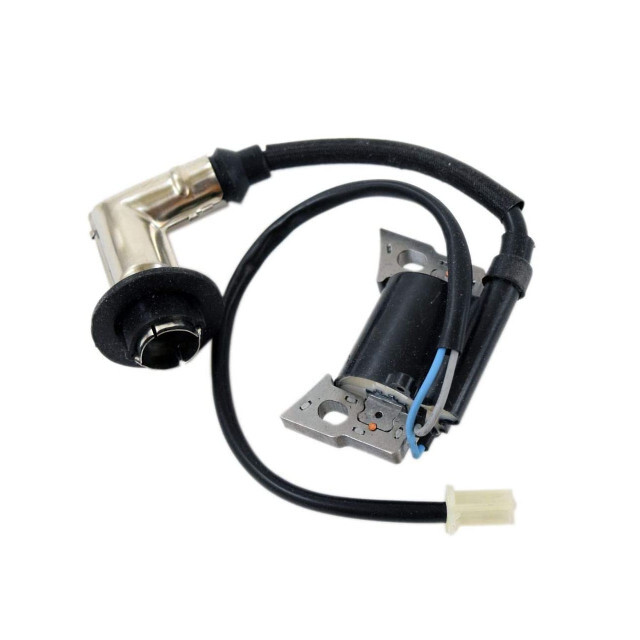
Below, we explain how the ignition coil works, the signs of failure, and a clear replacement guide for popular residential and commercial engines.
How the Ignition Coil Works on Briggs & Stratton Engines
The ignition coil produces the voltage needed for spark plug ignition. During operation, the flywheel magnet rotates and activates the coil, generating a spark at the correct timing moment.
The coil is responsible for:
- Generating a spark to ignite the air-fuel mixture
- Maintaining correct combustion timing
- Supporting consistent idle and throttle acceleration
When the ignition coil begins to fail, the spark weakens or disappears altogether, leading to starting issues or engine shutdown.
Signs Your Briggs & Stratton Ignition Coil Is Bad
- The engine cranks but does not start
- Weak or intermittent spark
- Backfiring or misfiring
- Sudden power loss when mowing or working under load
- The engine stops after warming up
If these symptoms are present, testing or replacement is recommended.
Compatible Ignition Coil Models
Ignition coils vary depending on engine series. Some of the most commonly replaced models include:
- Briggs & Stratton 450E-875EX Series
- Briggs & Stratton 550E & 625E Series
- Briggs & Stratton Professional Series™ engines
- Intek® V-Twin engines
- Quantum® models
Always verify compatibility using your engine code located on the blower housing or valve cover.
Tools Needed
- Socket wrench set
- Feeler gauge (recommended value 0.010"–0.014")
- T-25 or T-30 Torx, depending on the model
- Flywheel locking tool (optional)
Step-by-Step Guide: How to Replace an Ignition Coil
| Step | Action |
|---|---|
| Step 1 Disconnect Spark Plug |
Remove the spark plug wire to prevent accidental engine start. |
| Step 2 Remove Engine Cover |
Unscrew the shroud bolts, then lift off the cover to expose the flywheel and ignition coil. |
| Step 3 Unbolt the Coil |
|
| Step 4 Install the New Coil |
Place the coil back into the same position and tighten bolts lightly before adjustment. |
| Step 5 Set Correct Coil Gap |
The gap between the coil and the flywheel magnet is critical. Recommended clearance: 0.010" to 0.014" Place the feeler gauge on the magnet, tighten the bolts, and remove the indicator. |
| Step 6 Reconnect Kill Wire |
Make sure wiring clips are firmly secured—loose wiring results in no spark. |
| Step 7 Reassemble Housing and Test |
Reattach the cover, reconnect the spark plug wire, and start the engine. |
You should observe:
- Immediate smooth startup
- No stalling or misfires
- Stable full-throttle response
Maintenance Tips to Extend Coil Lifespan
- Keep the engine free of dirt around the flywheel housing
- Avoid storing the engine in high humidity without a fuel stabilizer
- Inspect coil wiring yearly
- Replace the spark plug annually
A bad spark plug increases ignition resistance, shortening coil life.
Final Recommendation
Replacing the ignition coil on Briggs & Stratton engine parts is a straightforward task when performed correctly. With proper clearance adjustment, clean assembly, and genuine-grade parts, your engine returns to optimal performance instantly. If your current coil shows heat damage, a weak spark, or meltdown marks, replacing it immediately can prevent further failures in electrical or combustion systems.
Recent Posts
-
How to Replace Ignition Coil on Briggs and Stratton Engines
When your Briggs & Stratton engine begins to experience weak spark, difficulty starting, or unexpect …Dec 10th 2025 -
What is the horsepower rating for a 420cc Briggs and Stratton engine?
When it comes to engines, particularly within a reputable brand like Briggs & Stratton, it is not un …Nov 3rd 2025 -

What Horsepower Does a Briggs & Stratton 250cc Engine Produce — And What Models Does It Include?
The 250 cc engine from Briggs & Stratton is the usual engine choice for a diverse array of outdoor t …Oct 2nd 2025